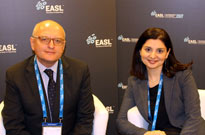
编者按:“Jean-Pierre Benhamou Clinical State-of-the-art:Liver Transplantation for the treatment of HCC”是第52届欧洲肝脏研究学会(EASL)年会第三日最值得一看的主题会,意大利米兰肿瘤研究所Vincenzo Mazzaferro教授受邀完成演讲。为此,本刊特邀Mazzaferro教授分享肝细胞肝癌(HCC)肝移植的最新进展,包括肝移植适应证、时机、长期生存及在发展前景。
《国际肝病》:临床上治疗肝癌的方法很多,包括肝切除术、射频消融术,TACE治疗、靶向治疗等。您认为哪些肝癌患者应建议首选肝移植治疗?
: Clinically, there are many ways to treat HCC including liver resection, radiofrequency ablation, TACE and targeted therapy agents. Which HCC patients are better suited for transplantation in the first-line?
Mazzaferro教授:推荐早期肝癌患者接受肝移植治疗,这些患者处于良好的肝硬化代偿阶段(Child-Pugh A级至Child-Pugh C级早期),是肝移植的最合适人选。根据一些扩大的标准,中期肝癌患者也可能成为肝移植候选人,其中有一些很好的病例来自中国。如果我们运用这些标准,可以获得相当好的生存率,捐助者的可获得性和遵守等待名单的必要性也是决定性因素。如果移植等待名单上排满了HCC患者,则需要对这些患者进行分层,以确定哪些患者处于丧失肝移植机会的边缘,比其他患者更迫切,必须跳至等待名单的顶部。
Prof. Mazzaferro: Liver transplantation is recommended for early stage hepatocellular carcinoma with well-compensated cirrhosis (Child A to early Child C cirrhosis). These are the perfect candidates because these patients have no other alternatives. You can be a candidate in intermediate stage disease according to some expanded criteria, of which there are some nice examples from China. If we apply those criteria, we can achieve quite good survival rates, dependent again on the availability of donors and the necessity to comply with a waiting list. If the transplant waiting list is full of hepatocellular carcinoma cases, there needs to be a stratification of those patients to identify who is at major risk of dropout and more urgent with respect to others, and necessary to be at the top of the waiting list.
《国际肝病》:关于肝癌患者的肝移植治疗,是否有研究比较过早期、中期及晚期各阶段接受肝移植的肝癌患者的长期生存率?
: Are there any studies comparing the long-term survival rate of HCC patients undergoing liver transplantation at different stages, such as early, mid or late stages?
Mazzaferro教授:目前,尚无前瞻性研究对不同分期肝细胞肝癌(HCC)接受肝移植治疗进行比较,这是一项具有挑战性的研究。几项研究显示,超出传统标准的患者接受肝移植治疗的效果有所下降,根据定义,这些患者均处于中期和晚期阶段之间。但如果观察这些患者的转归和生存情况,可以发现,与那些接受推荐治疗方案(如TACE、索拉非尼或局部治疗)的中期和晚期患者相比,接受肝移植治疗的患者具有明显的生存优势。所以,在条件允许和可行的情况下,肝移植带来的生存率普遍高于其他任何治疗手段。
Prof. Mazzaferro: There is not a prospective study comparing different stages of hepatocellular carcinoma treated with liver transplantation. That would be a difficult study to do. However, there are several studies showing patients beyond conventional criteria, which fall, by definition, between the intermediate and advanced stages. If we look at the outcomes in those patients and look at survival, we can see there is a clear advantage in survival in those patients who receive transplantation with respect to recommended therapies for those intermediate and advanced cases (TACE, sorafenib or locoregional therapies, for example). So whenever transplantation is allowed and feasible, survival is generally higher compared to any other treatment.
《国际肝病》:肝移植的时机对肝癌患者的长期生存是否有重要影响?
: Does the timing of liver transplantation have an important impact on the long-term survival of HCC patients?
Mazzaferro教授:在西方国家,关于肝移植的时机,最重要的问题在于患者放弃肝移植等待名单的时间。等待时间太长意味着患者肿瘤进展,甚至错失肝移植机会。所以,我们应针对影响放弃率的因素采取相应的措施,通过治疗来控制肿瘤生长(如多数采用局部治疗),控制肝硬化和失代偿进展。如果我们可以综合这些策略,就可以使患者留在尸体供肝等待名单上。除此之外,了解患者何时接近离开等待名单,而失去肝移植机会也很重要,我们应该给予这些患者优先权,应该分配更多的积分,让这些患者位列等待名单顶端,获得肝移植的机会。
Prof. Mazzaferro: The most important problem in liver transplantation with regard to timing in the Western world is the risk of dropping off the waiting list. The fact that the waiting time is too long means the tumor progresses and the patient misses the chance to be transplanted. We need to work on factors that are affecting the dropout rate. Therefore, we need to control tumor growth with treatment, such as locoregional treatments most of the time, and we need to control the advancement of liver cirrhosis and decompensation. If we can combine these strategies, we can keep the patient on the waiting list for cadaver donation. An important requirement then is the need to understand when the patient is close to dropping out and missing out on the chance to be transplanted. That is the time when we should prioritize these patients. We should allocate them more points to allow them to jump to the top of the list and get their chance at transplantation.
《国际肝病》:还有哪些预后因素影响肝移植后的长期生存?
: Are there other prognostic factors affecting HCC patients’ long-term survival after liver transplantation?
Mazzaferro教授:这取决于你考虑的终点。肝移植后,可以观察癌症相关事件和死亡率,以及由于其他因素导致的非癌症相关事件。关于癌症相关事件,我们需要考虑肿瘤的大小、肿瘤结节的数量、甲胎蛋白(AFP)水平、微血管入侵卫星以及肿瘤分化程度。这些都是可以预测癌症不良后果的因素。关于非癌症相关事件,我们需要考虑心血管疾病、合并症、年龄、肥胖症、代谢综合征以及肝炎病毒感染。
Prof. Mazzaferro: Yes, that depends on the endpoint you are considering. After transplantation, you can observe cancer-related events and mortality, and non-cancer-related events due to other factors. With respect to cancer-related events, we need to look at the size of the tumor, the number of tumor nodules, the AFP (alpha-fetoprotein) levels, microvascular invasion satellites, and the grade of differentiation of the tumor. These are all factors that can predict adverse outcomes with respect to cancer. With respect to non-cancer related events, we need to look at cardiovascular disease, comorbidities, age, obesity, metabolic syndrome and, of course, infection with a hepatitis virus.
《国际肝病》:请您谈谈未来肝移植在肝癌治疗中的前景?
: What are the future prospects for liver transplantation as a treatment for HCC?
Mazzaferro教授:在本次会议上,我们努力尝试传递的信息是,将患者的治疗应答情况作为肝移植决策的主要驱动力。等候时间对患者的治疗尤其重要,这时患者的应答情况为确定患者进行移植或不移植提供了非常重要的信息。所以,未来对于肝癌患者的肝移植,不再局限于西方指南中指出的疾病某一阶段,任何阶段的患者均可能接受肝移植,但是否进行肝移植取决于他们在不同阶段对任何形式的治疗作出的反应。我认为,随着一些创新的出现和更好的预测的发展,我们将能够在肝癌治疗中更好地定位肝移植指征。
Prof. Mazzaferro: The message we have tried to deliver at this meeting was that the response to therapy while the patient is considered for transplantation is the main driver for decision-making. It is extremely important to treat the patient while waiting. The response to that treatment gives you very important information about who should be transplanted or not. So the future for liver transplantation for HCC, rather than being confined to a certain stage of disease like it is in the Western guidelines, these patients could be at any stage of their disease but the decision to be considered for transplantation would be dependent on how they respond to any form of treatment at any stage. I think with some innovations and better prognostications in development, we will be able to better position the transplant indications for HCC within the treatment algorithm for hepatocellular carcinoma.
《国际肝病》:请Bhooli教授谈谈抗病毒治疗在肝癌治疗中的角色?
<Hepatology Digest>: Can you make a comment on antiviral treatment with respect to cancer treatment?
Bhooli教授:直接抗病毒药物(DAA)在丙型肝炎中的应用可能是肝脏病学中最戏剧性的变化之一。关于治疗慢性丙型肝炎对肝癌的影响,总体而言,肝癌的发病率正在下降。所有接受DAA治疗并获得持续病毒学应答的患者的肝癌发生率较低。在去年的EASL年会上,首次报道既往接受DAA治疗的患者的肝癌复发率意外增加。回顾性分析并没有证实这些结论,但需要注意的是,我们需要在未来几年内进行监测。在肝移植的特定背景下,慢性丙型肝炎的治疗正在迅速改变患者的移植名单,并且真正使移植后的HCV相关死亡率归零。当然,DAA治疗的成本和可及性问题依然存在。
Prof. Bhooli: The introduction of DAAs for the treatment of hepatitis C has been probably one of the most dramatic changes in hepatology, and maybe even in medicine overall because of the extrahepatic manifestations of viral hepatitis infections. With regard to the impact of HCV treatment on HCC, overall, the incidence of HCC is decreasing. All SVR patients (i.e. patients that have been treated with DAAs) have a lower incidence of HCC. At last year’s EASL Meeting, there was the first report of an unexpected increase in the recurrence of previously treated HCCs where there had been DAA treatment. It must be said that retrospective analyses have not confirmed those findings, but there is certainly a point of caution that we need to monitor over the next few years. In the particular context of liver transplantation, treatment of HCV hepatitis is very rapidly changing the transplant lists of patients, and is really zeroing the rates of mortality related to HCV after transplant. Obviously the problem with DAAS of cost and access to treatment persist.